Hello everyone, this is officially my first blog post and I’m really excited to have a platform for all my thoughts. A topic that I always have found interesting is the uniqueness of indigenous cultures, and I’ve decided to make my first entry precisely about that. In today’s increasingly digitally connected world, it gets harder and harder for indigenous societies to preserve their unique culture and adapt to the sweeping changes brought on by globalization and modern technology. In today’s blog, using the Sami people as a case study we’ll explore how certain cultures are affected by our increasingly interrelated world, what they risk losing and how they stand to benefit from the spread of the modern world.
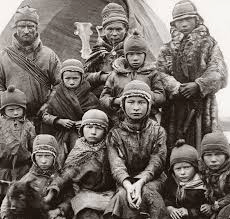
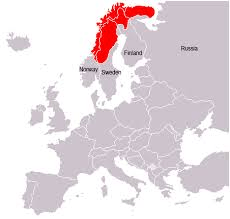
The Sami people are the traditional, indigenous people inhabiting the Sapmi region of northern Finland, Norway, Sweden, and parts of Russia. Traditionally, Sami are best known for their semi-nomadic lifestyle, reindeer herding and their fishing practices. The Sami arrived in their current homeland at an uncertain time during the Bronze Age, as Uralic groups (originating along the Volga river) have been speculated to have moved northwest until they ended up in the furthest reaches of the Finnish lakeland. Now that we have a basic understanding of the background of the Sami culture, let’s use them as a case study to explore the effect globalization has on them.
After conducting some research, I found that there are numerous challenges the Sami people are currently facing as they collide with modern life, both physically as they emigrate South and intellectually, when they are exposed to it via technology. Urbanization has drawn many Sami to move away from their traditional, rural lifestyle towards cities in search of jobs, and modern conveniences. Because of this, it is hard to continue their customary economic practices of reindeer herding and fishing. Additionally, as individuals move, the closeness of the community among Sami settlements is broken and sometimes disappears completely. In some cases, global culture threatens to overshadow long-lasting Sami practices, with younger generations engaging with digital entertainment rather than learning the art of storytelling and a recent expansion of tourism-driven commercialization leading to Western misinterpretation and exploitation rather than cultural exchange.
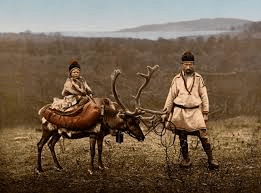
Despite this, it is also important to note the positive effects modern developments have had on the Sami and how this particular society has incorporated these to stay afloat. While fewer people are maintaining traditional practices, technology has made some, such as reindeer herding easier, as GPS helps herders track their animals, and the gasoline-powered snowmobile has replaced traditional sleds. Furthermore, while tourism can sometimes overshadow and outright exploit local cultures, globalization has increased worldwide awareness and appreciation of Sami culture, providing the opportunity for Sami to share their heritage with a broad audience. And while urbanization leads to a degradation of culture, there is a significant attempt being made to continue to maintain connections. In Tromso for example, there are Sami cultural centers and there are revitalization efforts to keep their ancestral languages alive through language schools. The app Samiraddi can be downloaded on your smartphone and you can learn Northern Saami from anywhere in the world.
So what does this all mean for the Sami and other indigenous cultures facing the same challenges? It’s clear that globalization has both negative and positive effects and it’s getting more challenging for indigenous groups to maintain the aspects of their culture that make them them. But it does make you wonder: in a world where everyone’s connected to the same internet and watching the same shows, can cultures really stay unique, or are we all just slowly becoming the same?
Sources:
- “How Has Modern Life Affected Sami Traditions?” VALO Finland,https://www.valofinland.com/how-has-modern-life-affected-sami-traditions/
- “Sámi people.” Wikipedia, https://en.wikipedia.org/wiki/S%C3%A1mi_people
 The New Anthropologist
Leave a comment