Today, I will be covering a different kind of language than I have previously, the world of whistling languages. In certain parts of the world, people communicate with what might seem like a simple call and response, but are in fact complete languages. By changing only the pitch and rhythm of whistles, speakers can express anything they could say in spoken language. From the Canary Islands to the mountains of Turkey to remote villages in Mexico and Asia, more than 80 cultures around the world are able to fully communicate in these incredible adaptations of language. By researching these cultures, we gain insight into how humans adapt to their environment when normal communication becomes difficult.
The most well-known exampleis probably Silbo Gomero from La Gomera, one of Spain’s Canary Islands. This language, while not the first language, has existed for centuries, and according to UNESCO, more than 22,000 people on the island speak (or whistle) the language today. One of the main reasons this language developed here isbecause of the deep valleys and steep cliffsthat characterize the geographical landscape. The whistling can be heard and understood up to five kilometers away. This unique language uses only six sounds: two whistles for vowels and four for consonants. The language was initially developed by the indigenous Guanche people, as early as the fifth century BCE, but was adapted to work with Spanish when white colonizers arrived in the fifteenth century. By the 1980s, Siblo had almost gone extinct because of modern technologies, but it has been protected by the residents. Since 1999, it’s been taught as a mandatory subject in school in all schools and, equally as important, in 2009, UNESCO recognized itas Intangible Cultural Heritage of Humanity.

Another lesser-known example of whistled language can be found in Southeast Asia and Latin America. The Hmong people living in the mountainous regions of China, Thailand, Vietnam, and Laos have used their whistled language for centuries to communicate over distances of up to 8 kilometers. Their whistled language, taken on some of the same characteristics as their spoken one, for example, both are highly tonal. The same word can have up to eight different meanings based on the pitch it is said in. The whistled language also has specific cultural uses. For example, young men traditionally whistle love poems outside the girl they are interested in’s house. Additionally, whistling is used in spiritual rituals to communicate with the spirit world. Across the world, the Mazatec people of Oaxaca, Mexico, use whistling for everyday communication, and it is considered more polite to whistle than to yell. Similar to the Hmong, the Mazatec is very tonal with three different pitches, making it easily translated into whistling. This tonal feature carries such a function that people can have entire complex conversations through whistles. Unfortunately, both of the above examples face extinction, unlike Silbo, because fewer young people learn them as a result of modern technology and globalization.
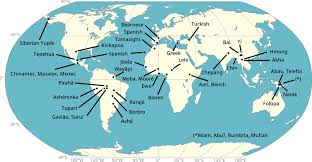
One of the most interesting aspects of these languages is finding out why they developed in the places they did. The environmental factors that led to whistled languages are pretty consistent across cultures. Nearly all of them evolved in places with mountainous terrain or dense forests where normal speech didn’t travel far enough for their ancestors to talk with each other. Whistles can reach 120-130 decibels and can be clearly heard above wind and water. Research has shown that certain whistled languages can be understood up to ten times farther away than shouting, a vital characteristic that would have been invaluable in the past. In La Gomera, shepherds still use Silbo to communicate across valleys. In the Amazon, hunters use whistling to talk and locate each other without scaring their prey. More recently, whistling has even been adapted to be used for discrete messaging. During the Spanish Civil War, locals in La Gomera were able to use Silbo to give a warning because the colonizers couldn’t understand them.
Unfortunately, the future of these distinctive languages is pretty uncertain, as they are threatened by modernization and the spread of cell phones. Young people just don’t see the point of learning whistling if they can call or text, and as older generations pass away, their knowledge dies with them. Situations like La Gomera, however, show us that it is possible to preserve them, and other cultures should take note and follow suit. In a modern world, whistled languages have lost much of their practical utility, but are extremely valuable for what they show about human language and cognition. As one linguistic anthropologist points out, when you lose a whistled language, you’re not just losing a particular way of communicating, but centuries of cultural knowledge and connection to the landscape. That’s why preservation efforts are so important and need to be taken.
Works Cited
“The Asian Tribe Where They Interact By Whistling.” The Guardian, 3 Apr. 2019, guardian.ng/life/the-asian-tribe-where-they-interact-by-whistling/.
“The Decline of Chinantec Whistled Speech in Mexico.” Al Jazeera, 8 Sept. 2017, www.aljazeera.com/features/2017/9/8/the-decline-of-chinantec-whistled-speech-in-mexico.
Fethiye Times. “Kuş dili – the whistle language of the Black Sea.” Fethiye Times, 13 Mar. 2024, fethiyetimes.com/kus-dili-the-whistle-language-of-the-black-sea/.
Kenyon, Peter. “In A Turkish Village, A Conversation With Whistles, Not Words.” NPR, 26 Sept. 2015, www.npr.org/sections/parallels/2015/09/26/443434027/in-a-turkish-village-a-conversation-with-whistles-not-words.
“Language of the Month August 2023: Silbo Gomero.” The National Museum of Language, languagemuseum.org/language-of-the-month-august-2023-silbo-gomero/.
“Mazatecan Languages.” Wikipedia, 4 Oct. 2025, en.wikipedia.org/wiki/Mazatecan_languages.
“Messages born of melody – hear the whistled language of the Hmong people.” Aeon Videos, 18 Dec. 2023, aeon.co/videos/messages-born-of-melody-hear-the-whistled-language-of-the-hmong-people.
Saville-Troike, Bob. “More Than 80 Cultures Still Speak in Whistles.” Smithsonian Magazine, 19 Aug. 2021, www.smithsonianmag.com/science-nature/studying-whistled-languages-180978484/.
“Silbo gomero, the whistling language of La Gomera.” La Gomera, 18 May 2021, lagomera.travel/en/silbo-gomero-the-whistling-language-of-la-gomera/.
UNESCO. “Whistled language of the island of La Gomera (Canary Islands), the Silbo Gomero.” UNESCO Intangible Cultural Heritage, ich.unesco.org/en/RL/whistled-language-of-the-island-of-la-gomera-canary-islands-the-silbo-gomero-00172. “Whistled Language.” Wikipedia, 20 Jan. 2026, en.wikipedia.org/wiki/Whistled_language.

 The New Anthropologist
Leave a comment